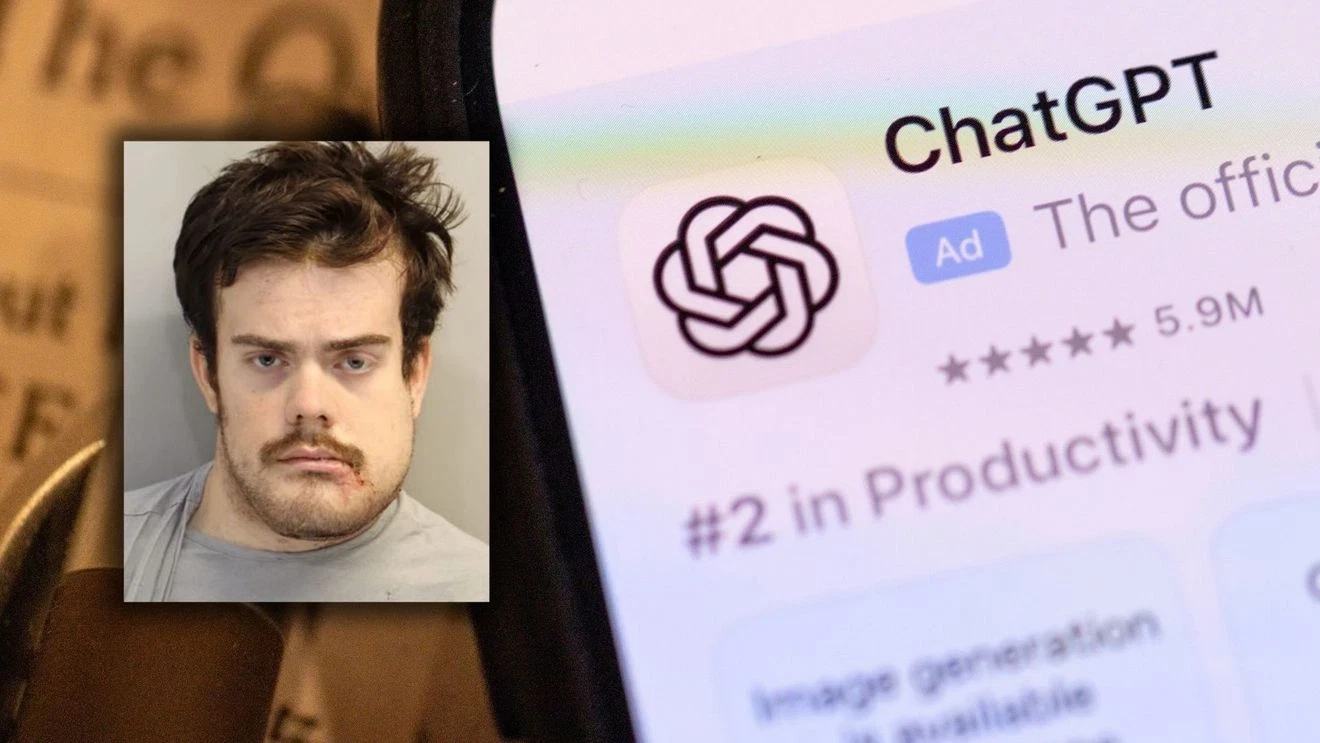
Now, is ChatGPT helping criminals? In the aftermath of a deadly mass shooting in Florida, a new angle has come under scrutiny. Investigators have begun probing whether AI tools were misused for the crime, putting their role under the lens.
The Criminal Investigation into OpenAI
The crucial decision was taken in connection with the 2025 Florida State University mass shooting. Authorities examined a new and complex angle as the chats became a key focus of the probe.
James Uthmeier, Attorney General, Florida: “We’re announcing that we are launching a criminal investigation into OpenAI and ChatGPT, and we’ll be sending criminal subpoenas to OpenAI probably right now. As you know, a couple of weeks ago we announced that we had begun an investigation for months now. We’ve been looking at several harms that Floridians, Americans have been suffering as a result of ChatGPT.”
Investigators aim to determine whether the AI tool aided or abetted the crime. Florida’s Office of Statewide Prosecution has subpoenaed OpenAI for records to uncover the full extent of the platform’s involvement.
Shocking Revelations from the Chat Logs
The Florida Attorney General stated that the prosecutor reviewed exchanges between ChatGPT and the suspected gunman, Phoenix Ikner. The communications revealed that the chatbot allegedly provided terrifyingly specific advice regarding the attack:
- Weaponry & Ballistics: The chatbot advised the shooter on what type of gun to use, which ammo went with which gun, and whether or not a gun would be useful in short range.
- Tactical Planning: ChatGPT advised the shooter on what time of day would be appropriate for the shooting to interact with more people, and where on campus would be the place to encounter a higher population.
James Uthmeier, Attorney General, Florida: “My prosecutors have looked at this, and they’ve told me if it was a person on the other end of that screen, we would be charging them with murder.”
Legal Ramifications and OpenAI’s Defense
Under Florida law, anyone who aids, abets, or counsels a crime can be treated as equally responsible as the perpetrator. This has raised serious legal questions around emerging technology. Meanwhile, Phoenix Ikner faced charges of murder and attempted murder, with prosecutors seeking the death penalty in the case.
Earlier, OpenAI called the incident a tragedy but denied any responsibility, reiterating that its systems were not designed to support harm. In fact, when the incident occurred, OpenAI had clarified that ChatGPT was not responsible for the crime. It also identified the suspect’s account and shared it with law enforcement.
The 2025 FSU Mass Shooting
The attack itself shocked the nation. In 2025, Ikner went on a rampage through Florida State University, opening fire on students. Two people were killed and six others were injured before police intervened. He was shot by law enforcement and hospitalized with serious but non-life-threatening injuries.
A Pattern of AI Misuse and Tragic Precedents
However, this was not the first time AI tools were linked to serious incidents. Concerns had surfaced in earlier cases as well:
- The 2024 Character.ai Lawsuit: A US family filed a lawsuit against Character.ai, alleging their teenager developed a harmful dependence on a chatbot before dying by suicide. The case remained a civil lawsuit with no criminal conviction, as causation continued to be disputed.
- The 2023 Belgium Tragedy: A similar case emerged in Belgium where a man reportedly died by suicide after prolonged chatbot interactions. Investigators treated the chatbot as a possible contributing factor, though it was not established as the sole cause.
- AI Jailbreaks: Across multiple countries, reports have also flagged AI jailbreak misuse. This is where users attempt to bypass safeguards to extract information about weapons instructions and drug synthesis, raising concerns about AI-generated extremist content.
As the investigation unfolded, technology stood at the center of a growing legal and moral debate: Where did human intent end and digital influence begin? And ultimately, could technology itself ever be held accountable?