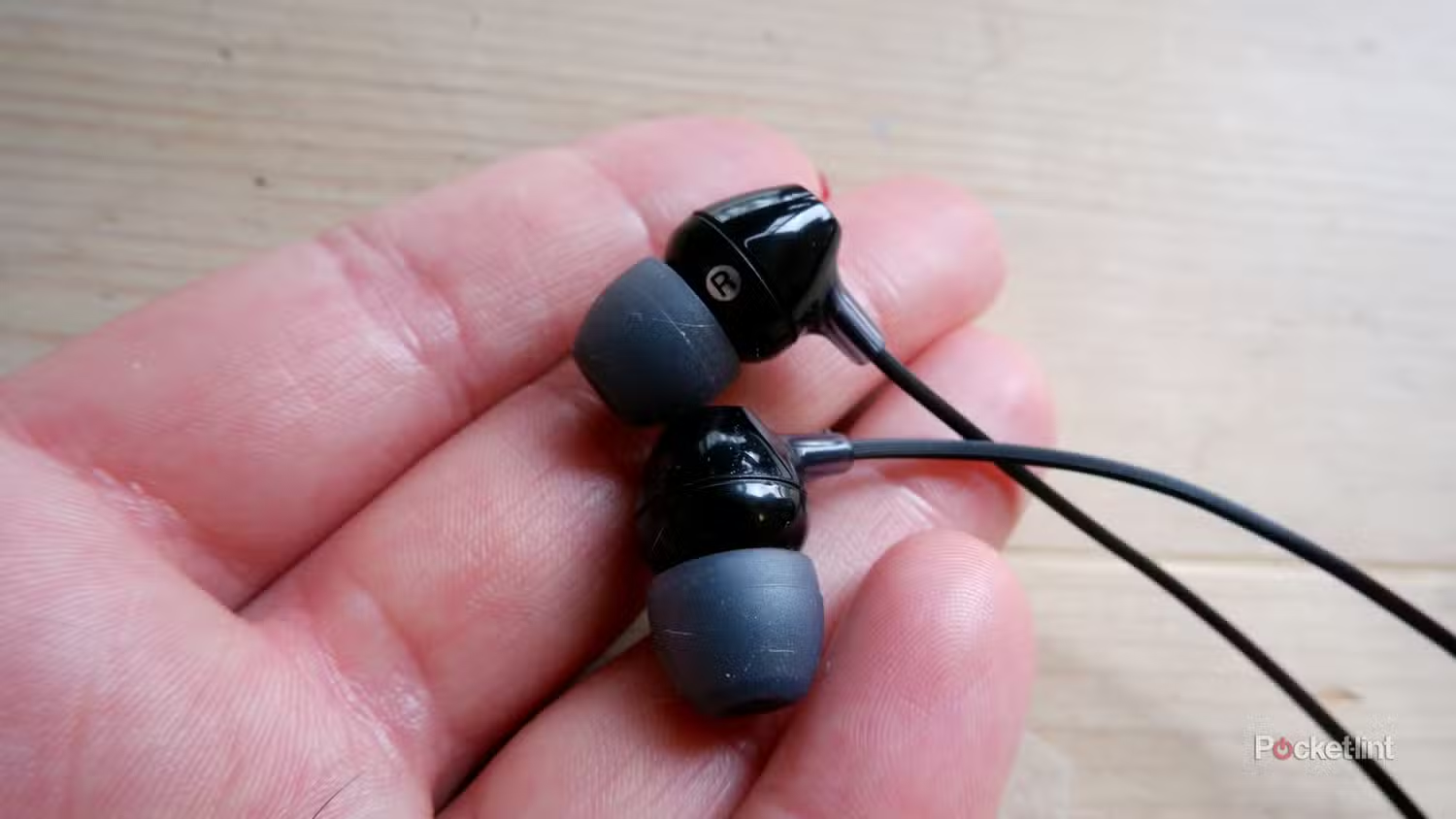
The Bluetooth Era – And wired headphones are so back. There was a time not long ago when wired headphones were treated like floppy discs. Tiny white fossils tangled at the bottom of drawers beside expired chargers and maybe emotional damage from 2014. Then came 2016. That was the year Apple ceremoniously removed the headphone jack from the iPhone 7 and called it Courage, which remains one of the greatest rebranding exercises in corporate history. Think about it. Because we removed a universally useful feature and will now sell it to you as an adapter separately. That sounds less inspiring in keynote slides, doesn’t it?
The industry followed immediately. Android companies mocked Apple publicly and then quietly murdered their own headphone jacks months later like nervous henchmen in a mafia film. And just like that, humanity entered the Bluetooth era. An era where listening to music now involved charging your headphones, pairing your headphones, updating firmware for your headphones, searching for your headphones, replacing one lost earbud for the price of two. Headphones became software. And I don’t mean to be dramatic, but that spiritually feels wrong.
Wired Headphones Are Back
But now, against every expectation, wired headphones are back. Not just among audio files who own six amplifiers and refer to sound signatures like wine somles. The point is they’re actually back. And the comeback tells us something much bigger than people like better bass. It tells us people are exhausted. The numbers are real now. For years, wired headphones looked commercially dead. And according to reports, wired headphone sales had declined for five straight years. In 2024 alone, the category lost around $42 million in sales.
Then something weirdly wired happened. In 2025, wire headphones sales grew by 3%. Revenue increased by around $15 million. Sales accelerated sharply in the second half of the year. Between July and December 2025, growth jumped 10%. And then came the real surprise. In the first 6 weeks of 2026, wired headphone revenue surged another 20% year-over-year. That is an actual market reversal. Especially remarkable because consumer tech categories almost never resurrect once declared obsolete. But just to be clear, wireless audio still dominates overall revenue, around 80% of the market. But the wide resurgence matters culturally because it was supposed to be impossible.
Cheap Wires Are Beating Expensive Innovation
The funniest part, cheap wires are beating expensive innovation. Part of the appeal is brutally practical. One survey found the average wired headphones sell for about $13 and wireless pairs around $99. And consumers are asking, why am I paying eight times more to introduce batteries, charging anxiety, and connectivity issues into something that used to work perfectly fine?
Every Bluetooth interaction feels like mediating peace talks between invisible nations. Connected, disconnected, pairing failed. Why does every modern object in life now require electricity updates and emotional maintenance? My headphones need charging. My watch needs charging. My toothbrush has firmware. Wired headphones, meanwhile, continue their radical innovation strategy. You plug them in, audio happens.
Visible Disengagement
The audio files were right. For years, audio files screamed into online forums that wired audio sounds better. Everyone ignored them. Maybe because they communicate like Victorian chemists, but they were correct. Professional musicians, editors, gamers, and sound engineers never truly abandoned wires, and that should have been our clue.
But this isn’t really about sound. If it were only about audio quality, that would remain a niche. Instead, wired headphones became fashionable. Celebrities like Lily Rose Depp, Bella Hadid, internet trends setter godmother Hailey Bieber are photographed wearing wired earphones. Fashion editors describe them as effortless, analog, nonchalant, which sounds ridiculous until you realize fashion has always loved visible disengagement. Wireless earbuds disappear. Wired headphones announce themselves. They say, “I’m unavailable respectfully.” And in an age where every app, platform, and algorithm is screaming for your attention, visible disengagement is becoming aspirational.
A Small Rebellion
And then there was the Kamla Harris moment. Harris explained that she prefers wired earphones for sensitive conversations because they’re more secure. Now, this does not mean your AirPods are secretly transmitting your gossip directly to intelligence agencies. But the reaction was revealing, wasn’t it? People instantly believed it. Why? Because trust in invisible technology is eroding.
But there is a story here. People are tired. Tired of hyperdigitization. and tired of being harvested for engagement metrics like emotional livestock. People are actually saying, “Can we please have our buttons and our wires back?” Consumers are not rejecting technology outright. They’re rejecting technological excess. We are going back to the basics. It’s just wired headphones. But culturally, they symbolize something deeper. A small rebellion against technological maximalism. After a decade of apps demanding attention and AI trying to predict our every thought, plugging a cable directly into a device feels oddly radical.