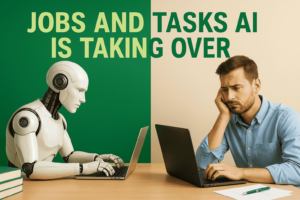
The Paradox of Progress: Why Gen-Z Fears the Tech They Grew Up With: Now, Gen Z is seen as the tech generation. They don’t have to adopt technology. They’re born with it. So, one would assume that Gen Z is also a fan of AI, that they would enjoy their chatbots and AI video generators.
Well, think again. A new study looked at 1,500 Gen Zers from the United States. These are people born between 1997 and 2012. And what did they find? Gen Z is increasingly worried about AI.
Falling Excitement, Rising Anger
Let’s look at the numbers first.
- In 2025, 36% of Gen Z were excited about AI. This year, that fell to just 22%.
- In 2025, only 22% of Gen Z were angry about AI. Today, that’s up to 31%.
So, what do these numbers tell us? That positive emotions about AI are falling and negative sentiments are rising.
Let’s look at more numbers regarding AI’s utility:
- Expediting Work: In 2025, almost 66% of Gen Z said that AI could expedite their work. By 2026, this came down to 56%.
- Gathering Accurate Info: In 2025, 43% of Gen Z believed that AI helped them gather accurate information. Now it’s down to 37%.
- Ideation: Last year, 42% of Gen Z claimed that AI helped them come up with new ideas. Again, now down to 31%.
More and more young people are becoming wary of AI. 48% of them say that AI’s risks outweigh the benefits. Last year, only 37% believed that. So clearly, this isn’t some fluke. This is a significant trend.
Is Familiarity the Problem?
The question is, what is causing it? Is it because more young people are now familiar with AI? Quite the contrary, actually. AI usage hasn’t really changed among Gen Z. Last year, around 47% of Gen Z used AI daily or weekly. Now around 51% use it daily or weekly. That’s not a seismic change in usage.
Plus, the more you use, the more comfortable you feel. Look at the data: 44% of daily AI users feel excited about AI; only 18% of them were angry. At the same time, only 4% of non-AI users were excited about this technology, while nearly 59% of them were angry.
So, do you see the pattern here? Usage and familiarity doesn’t seem to be the problem. Then what is?
The Three Core Concerns
Young people broadly mentioned three problems:
- Threat to jobs
- Threat to human interactions
- Threat to misinformation
All legitimate concerns. Reports say AI is eliminating 16,000 American jobs per month. Studies show that globally around 300 million jobs could be lost to AI. And yes, I know what people will say: “Some jobs will go, but other jobs will come.” But what are those jobs? How should young people prepare for them? Are there textbooks teaching them the appropriate skills? That part isn’t clear yet.
And of course, AI misinformation needs no explanation. It is a rampant phenomenon across social media. Forget young people—everyone is fed up with AI slop. So, you can’t really blame Gen Z for being wary and confused. Their lives and livelihoods are being tested by a generational technology.
The Clash of Three Truths
But what will be the impact of this trend? Well, it’s a clash of three undeniable truths:
- Truth Number 1: AI is here to stay. It may not be perfect. It may not even be safe, but it’s not going anywhere.
- Truth Number 2: Companies will use and adopt AI. Studies show that companies benefit from AI adoption.
- Truth Number 3: Gen Z is the future of the global workforce. These are people aged 14 to 29. They will carry the workforce for decades. They will lead companies in the years ahead.
So if Gen Z doesn’t trust AI, how will companies adopt it? How will AI be integrated into daily operations?
A Lack of Guardrails
This goes beyond just casual skepticism or confusion. This is a sign of mistrust and anger, and it’s not misplaced either. Companies and governments have failed to detail their AI plans. How will school curricular be updated? How will companies use AI? What sort of jobs will become obsolete? These are questions we do not have the answers to.
And it doesn’t help that you have rogue AI bots like Grok on the internet—bots that joke about Nazis and spread fake news.
We have to realize that Gen Z isn’t rejecting the technology, they are wary of the confusion around it. They are angry at the lack of guardrails.
So, it’s time for governments and companies to get cracking and start building trust between AI and young people.