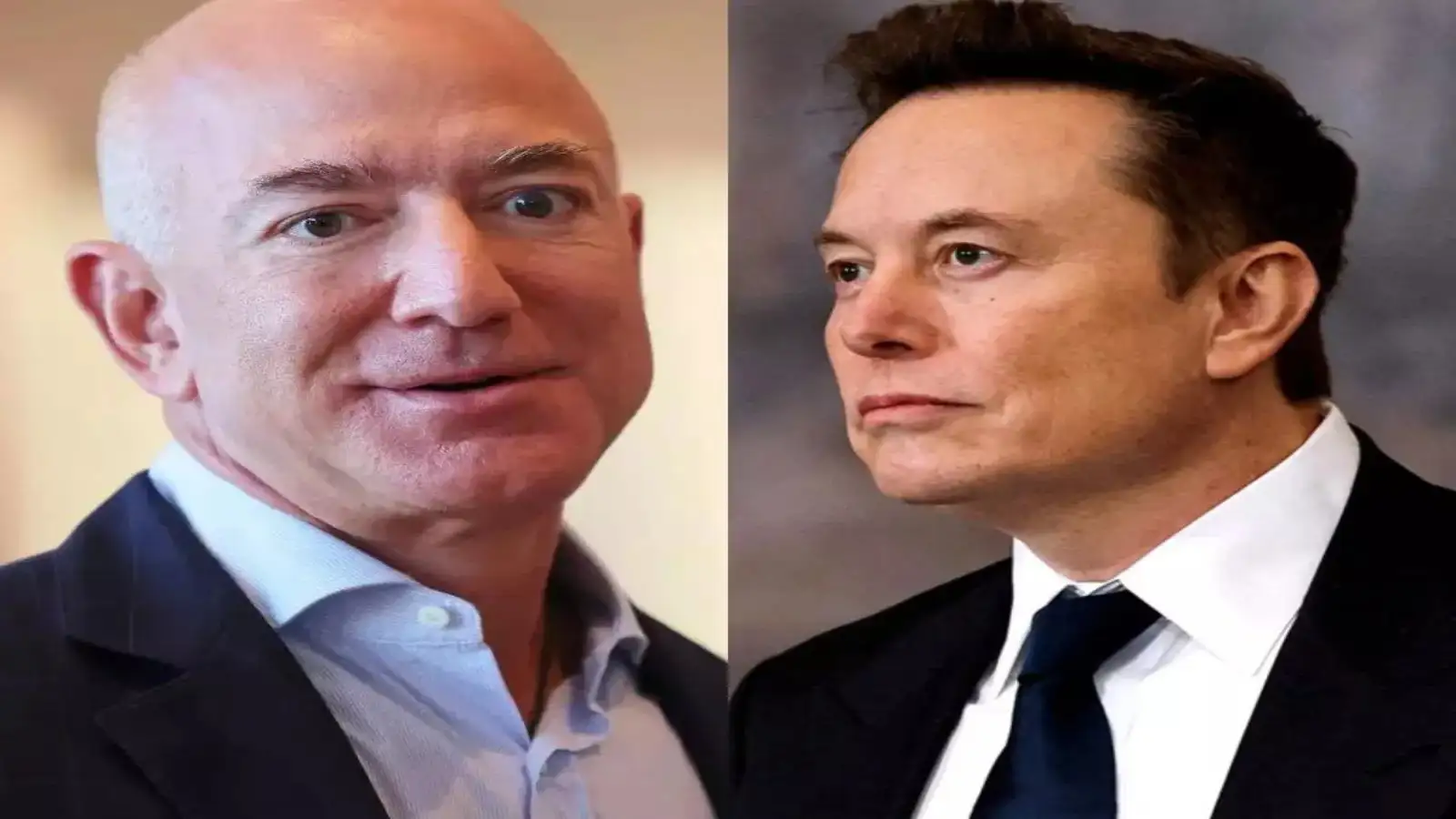
Bezos vs Musk Space Race: Amazon Targets Starlink with Satellite Deal: Our next story is about a space race, but not between countries like the United States, China, or Russia. This one is between two billionaires: Jeff Bezos and Elon Musk. And right now, this race is heating up again. Let me tell you how.
The $11.5 Billion Shortcut
Amazon has just signed a massive deal worth $11.5 billion to buy a satellite company called Global Star. This is a firm that operates low Earth orbit satellites. On the face of it, this looks like a standard acquisition, but it is not. This deal gives Amazon something very specific: direct-to-device technology. In simple terms, it is the ability of phones to connect directly to satellites without the use of mobile towers.
To understand why this matters, look at what Global Star already does:
- It enables features like emergency SOS on smartphones.
- It powers the “Find My” device feature on Apple iPhones and watches.
So for Amazon, this deal is a shortcut. It does not have to build this capability from scratch. It gets technology, spectrum, and infrastructure all at once. And that matters because the company is already working on a much bigger plan—a satellite network called Project LEO. It has a target of launching over 3,000 satellites by 2029, with the aim of global internet coverage from space.
The Dominance of SpaceX
But here’s the thing. This is not an empty market, and Amazon is late to it. Elon Musk’s SpaceX already dominates it. Its internet service, called Starlink, is already operating at a larger scale:
- Starlink has more than 10,000 satellites in orbit.
- It has over 9 million users worldwide.
Amazon is still at an early stage. So this deal is seen as closing a gap not just in numbers but in capability, especially in direct-to-phone connectivity, which is now emerging as the next big segment.
Why Direct-to-Device is the Future
Why? Because it changes how connectivity works. Like I said, you do not need mobile towers. You do not need local network infrastructure. A phone can link directly to a satellite. That means coverage in remote regions, on aircraft, during natural disasters, and in conflict zones. It also creates a new market for emergency services, basic messaging, and global connectivity—and that is where the competition is now shifting.
SpaceX is also moving into this space through partnerships with telecom companies. So both sides are targeting the same future, but they’re using different approaches. SpaceX has built scale through frequent launches and a massive constellation of satellites. Amazon, on the other hand, is building through investment and targeted acquisitions like this one.
A Multi-Layered, Personal Rivalry
And this rivalry does not stop at the internet. Both Musk and Bezos are also competing for NASA contracts, especially for the Artemis program. This is America’s mission to put humans back on the moon (a recent mission flew humans around the moon for the first time in decades). So their competition is multi-layered. It is in orbit and beyond it.
And it is not just strategic, it is also personal. This rivalry goes back years. The two first met in 2004 when both were building their rocket companies. Since then, they’ve clashed over several contracts, launchpads, and patents. There have been multiple lawsuits, public remarks, and at times even personal jabs. The competition has also spilled into wealth and status, with both men taking turns as the world’s richest person.
High Stakes and the Trillion-Dollar Question
And that is exactly what makes this deal so important. The stakes are significant. Starlink is already a major revenue driver for SpaceX. It represents roughly 50% to 80% of SpaceX’s total revenue. Plus, there are reports that SpaceX is preparing for an IPO (Initial Public Offering). It means the company could sell its shares to the public and list on the stock market.
Reports say SpaceX’s valuation could cross $1 trillion, which shows how large this market has become and why Amazon is moving now.
What This Deal Changes
Long story short, what does this deal change?
- It strengthens Amazon’s position: It does not put Amazon in the lead, but it adds technology, brings existing capability, and helps Amazon move faster.
- It shifts the competition’s focus: The race is moving from just launching satellites to what those satellites can actually do.
This is no longer only about putting hardware in space. It is about controlling how people connect directly and globally. For Amazon, this deal fills a critical gap in direct connectivity and mobile integration. For SpaceX, the challenge is different: to hold its lead as new players scale up.
So, this is no longer just a space race. It is a connectivity race, and soon it could shape how the world stays online.