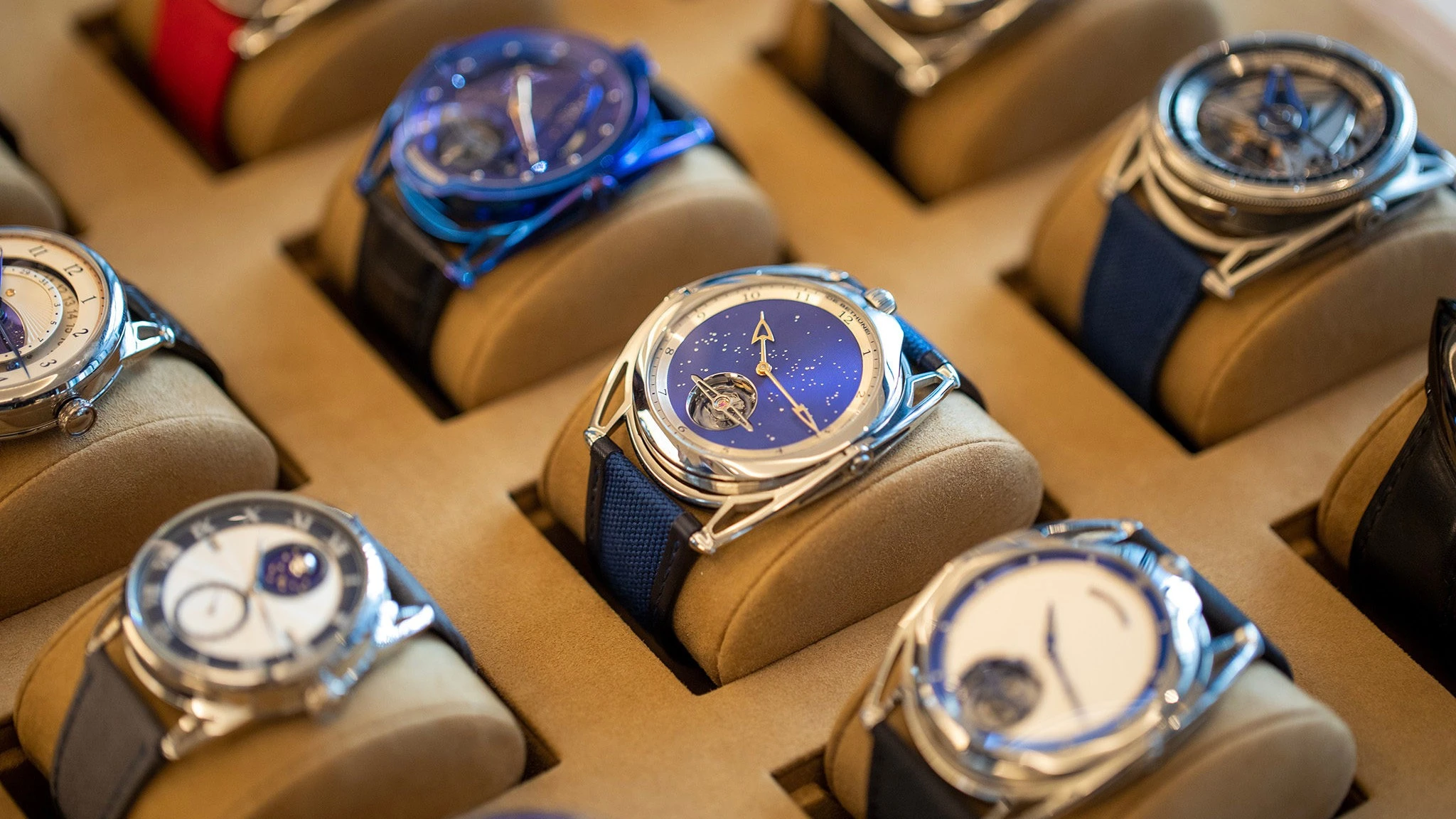
The war in West Asia has tarnished the outlook for one of the world’s most exclusive industries. Starting Tuesday, April 14th, Geneva hosts the annual Watches and Wonders fair, which is the most prestigious gathering in the global luxury watch industry.
65 brands, 60,000 expected visitors, billions of dollars in deals, and an industry desperately hoping this is the year it finally rebounds after two consecutive years of market contraction. But the Iran war has arrived at the worst possible moment, and it is casting a long shadow over the glittering halls of Geneva.
How the War Impacts Luxury Watches
So how does a war in West Asia affect the price of a Rolex? The US-Israeli war against Iran that began on February 28th has had a sweeping impact on the global economy, driving up energy prices, stalling fertilizer shipments, disrupting air travel, and now sending renewed inflation pressures through every consumer market.
High-end watches have not been spared. And the Gulf Arab market, which is one of the most lucrative in the world for luxury timepieces, is at the center of the disruption.
Because here’s what makes the Gulf so critical to this industry: Purchases from UAE residents appear to be holding up. But tourist traffic, which drives a massive share of luxury watch sales in places like Dubai airport, has taken a significant hit due to Iranian strikes on the country. Dubai airport is one of the world’s busiest luxury retail hubs. When tourists stop flowing through it, the watchmakers feel it immediately.
Pre-Existing Pressures on the Swiss Market
But the Iran war is only one layer of pressure on this industry because it was already in trouble before the first missile was fired. According to a Morgan Stanley report compiled with independent consultancy LuxConsult, Swiss watch exports declined 1.7% last year in value terms due to several factors:
- Currency Valuation: A relatively strong Swiss Franc compared to the US dollar and the Euro made Swiss watches more expensive for foreign buyers.
- Raw Material Costs: Soaring prices for precious metals like gold and silver over the past year drove up production costs significantly.
- Trade Tariffs: Trump’s Liberation Day tariffs launched a year ago were already affecting the market even before the Iran war began.
Diplomacy in Tick Marks
Now here’s where the Swiss industry and Washington had a remarkably unusual moment. Trump imposed exceptionally high tariffs on Swiss goods, hitting a peak of 39%. That was the highest tariff rate faced by any developed Western nation—higher than France, Germany, or the United Kingdom.
A delegation of Swiss business executives traveled to the White House and offered Trump gifts, including a Rolex clock. The following month, a deal was announced that sharply lowered US tariffs on Swiss products. Sometimes diplomacy is conducted in tick marks.
The Industry Landscape
Now, let’s zoom into what this industry actually looks like. Swiss-made watches represent roughly 96% of the entire global luxury watch market, defined as watches retailing for at least 2,000 Swiss Francs each, or over $2,200.
The top four brands—Rolex, Cartier, Patek Philippe, and Omega—make up more than half of Switzerland’s total retail market share between them. There are 450 watchmakers in Switzerland alone, and Watches and Wonders features just 65 of them. The most elite sliver of an already elite industry.
The Heart of the Paradox
And here’s the paradox at the heart of this industry right now. Despite all the headwinds, the ultra high-end segment of the market is actually growing. Handcrafted watches priced at more than 50,000 Swiss Francs (that’s over $63,000) made up 37% of the total value of Swiss watch exports last year, up from 33.5% in 2024. The very wealthiest buyers are still spending.
The Rise of Asian Challengers
In a crisis, the luxury market consolidates at the top and some non-Swiss challengers are now making their move. The Morgan Stanley report identifies Japan’s Grand Seiko as the most credible non-Swiss challenger in the luxury space. And in a striking mention, India’s Titan is identified as making a serious run at the top tier.
As the Swiss face headwinds, their Asian competitors are quietly gaining ground.