Steve Jobs, Former CEO: “Apple… and serve the people that have been buying our products since the beginning. Because a lot of times people think they’re crazy, but in that craziness, we see genius. And those are the people we’re making tools for.”
There’s an old paradox that philosophers have struggled with for centuries: The Ship of Theseus. If you replace every plank of a ship one by one until nothing of the original remains, is it still the same ship?
Apple turned 50 this year, and in many ways, it is the Ship of Theseus of our time. The garage in Los Altos is gone. The boxy beige computers have gone. The man who built it all is also gone. The company has replaced nearly every plank it was built with—its chips, its software, its products—all rewritten more than once in moments of dramatic resurrection.
And yet, when you walk into any Apple store today, that cool white light, that hum of quiet excitement, and something unmistakable hits you. You know exactly where you are. Fifty years in, Apple remains among the most argued about, most imitated, most obsessed over companies on the planet. Call it taste, call it obsession, or call it, as Steve Jobs once did, a desire to “put a dent in the universe.”
Now, as Apple completes 50 years of thinking different, this is a moment to ask: After years of reinvention, iteration, and replacement, is it still the same Apple, or just a reconstruction of what it once was?
The $370 Billion Mistake
On April 1st, 1976, a scrawny hippie and a nerdy engineer walked into a garage and decided to change the world. The joke, of course, is that they founded it on April Fool’s Day. The punchline is that they actually pulled it off. Steve Jobs, Steve Wozniak, and a third co-founder, Ron Wayne, started it. Wayne decided early on that this whole thing was a bad idea and sold his stake back to them for $2,300. Based on what Apple is worth today, that decision cost him roughly $370 billion. Not the best call, but here’s the thing: Wayne wasn’t entirely wrong to be nervous because Apple nearly didn’t make it.
In 1985, the company Jobs built showed him the door. For 12 years, Apple drifted. And then in 1997, they called Jobs back. He returned reluctantly as a temporary adviser, or so the story goes. What happened next was anything but temporary.
The iPod, the iPhone, the iPad. Three products in a decade that didn’t just save Apple; they rewrote what technology could feel like.
The Scale of the Apple Empire
To understand how far Apple has come, you need to start with a number: 10 Cents, That’s what one Apple share was worth (adjusted for splits) when the company went public in 1980 at $22 a share. If you had spent $2,200 that day and simply held on, your investment would be worth more than $5.5 million today.
Apple’s first real hit came in 1977 with the Apple II, priced at around $1,300 (which would be around $7,000 in today’s money). It was expensive, it was boxy, and people couldn’t get enough of it.
But nothing prepared the world for what happened on January 9th, 2007. Jobs walked onto a stage in San Francisco and told the audience he had three things to show them: an iPod with touch controls, a revolutionary phone, and an internet communicator. The crowd went wild, and then he paused.
Steve Jobs, Former CEO: “These are not three separate devices. This is one device, and we are calling it the iPhone.”
More than three billion iPhones have been sold since that moment. The device still accounts for more than half of Apple’s $416 billion in annual revenue. Every company wants loyal customers. Apple built something rarer than that: it built believers.
The Jobs Obsession vs. The Cook Method
The iPhone is now considered the most successful consumer electronics product ever made. It’s not just a phone, but as analysts put it, a global fashion and status symbol. Before it, the iPod rewired how we listen to music. After it, the iPad made tablets a thing people actually wanted.
And underneath all of it was one man’s obsession. Jobs wasn’t an engineer in the traditional sense; he couldn’t write code the way Wozniak could. What he could do was something harder to name. He had an almost violent insistence that technology should feel human. While others were building machines for people who understood machines, Jobs was building machines for everyone else.
He died in 2011 at the age of 56. The question that followed his death—the question that still hasn’t been fully answered—was whether the obsession would die with him.
Tim Cook took over. Quiet where Jobs was loud. Methodical where Jobs was mercurial. He didn’t launch the next iPhone-level revolution. Instead, he did something arguably harder: he turned Apple into a services company without anyone noticing. Apple Music, Apple TV+, iCloud, the App Store. The hardware brings you in; the software keeps you there. Cook didn’t put a new dent in the universe; he monetized one Jobs had already made.
Tim Cook, CEO: “Today, we’re announcing Apple Music, the next chapter in music. And I know you are going to love it. It will change the way that you experience music forever.” June 8, 2015 (California, U.S.)
The Supply Chain Shift: From China to India
For decades, the story of Apple’s manufacturing was also the story of China. Tim Cook was the architect of that relationship. It was his masterstroke, and it may yet become his biggest liability.
The majority of iPhones are assembled in Chinese factories, primarily by a contractor called Foxconn. That arrangement made Apple’s supply chain one of the most efficient in the world. It also made Apple deeply and comfortably dependent on one single country and a single political relationship. Trade tensions, tariffs, and the long, slow unraveling of the US-China dynamic—all of it has landed squarely on Apple’s doorstep.
And so, Apple is moving. By the end of 2026, the majority of US-bound iPhone production is expected to come from India. India is the subplot of this chapter that nobody saw coming. For years, it was an afterthought—a price-sensitive market where iPhones were too expensive and Android ruled without contest. That story is over. Apple has opened flagship stores in Mumbai and Delhi. It is building the infrastructure of a second home. One of the world’s most valuable companies is making a bet on the world’s most populous country.
The AI Challenge and the Innovation Rot
Now comes the uncomfortable question Apple has been trying to dodge for the last two years: Is it losing the plot on AI?
While Google, Microsoft, and OpenAI were racing to redefine computing itself, Apple was quietly promising a smarter Siri. The upgrade was announced, then delayed, then announced again. For a company that once made punctuality a form of theater, the stumble was hard to miss.
And rather than rebuilding Siri from scratch with its own models, Apple did something surprising: it turned to Google. It’s an uncomfortable arrangement, but a pragmatic one. Because Apple’s play in AI was never going to look like OpenAI. Apple doesn’t sell data; it sells privacy. If anyone can make AI feel personal without making you feel spied on, it’s the company that has spent 50 years obsessing over how technology feels.
But there are other problems. The innovation rot runs deep. Recent product cycles have felt incremental—refinements, not revolutions. New products like AirPods, Apple Watches, and Vision Pro haven’t disrupted markets the way the iPhone once did. Apple lost several AI researchers in 2025 who left for rivals like Meta, a damning signal that the talent war is being fought in real-time.
China tells an even grimmer story. Apple recently lost its spot as the top smartphone seller in China (the world’s biggest smartphone market) to local rivals Vivo and Huawei.
The Final Chapter of Tim Cook?
The smarter Siri is still coming. The foldable iPhone reportedly is coming, too. And Cook, who has led Apple for nearly 15 years—longer than Jobs did in his legendary second act—may be writing the final chapter of his tenure right now. He came in to fix operations and stayed to build one of the most valuable companies in history. What he leaves behind, and who he leaves it to, might be the most consequential decision Apple makes in the coming years.
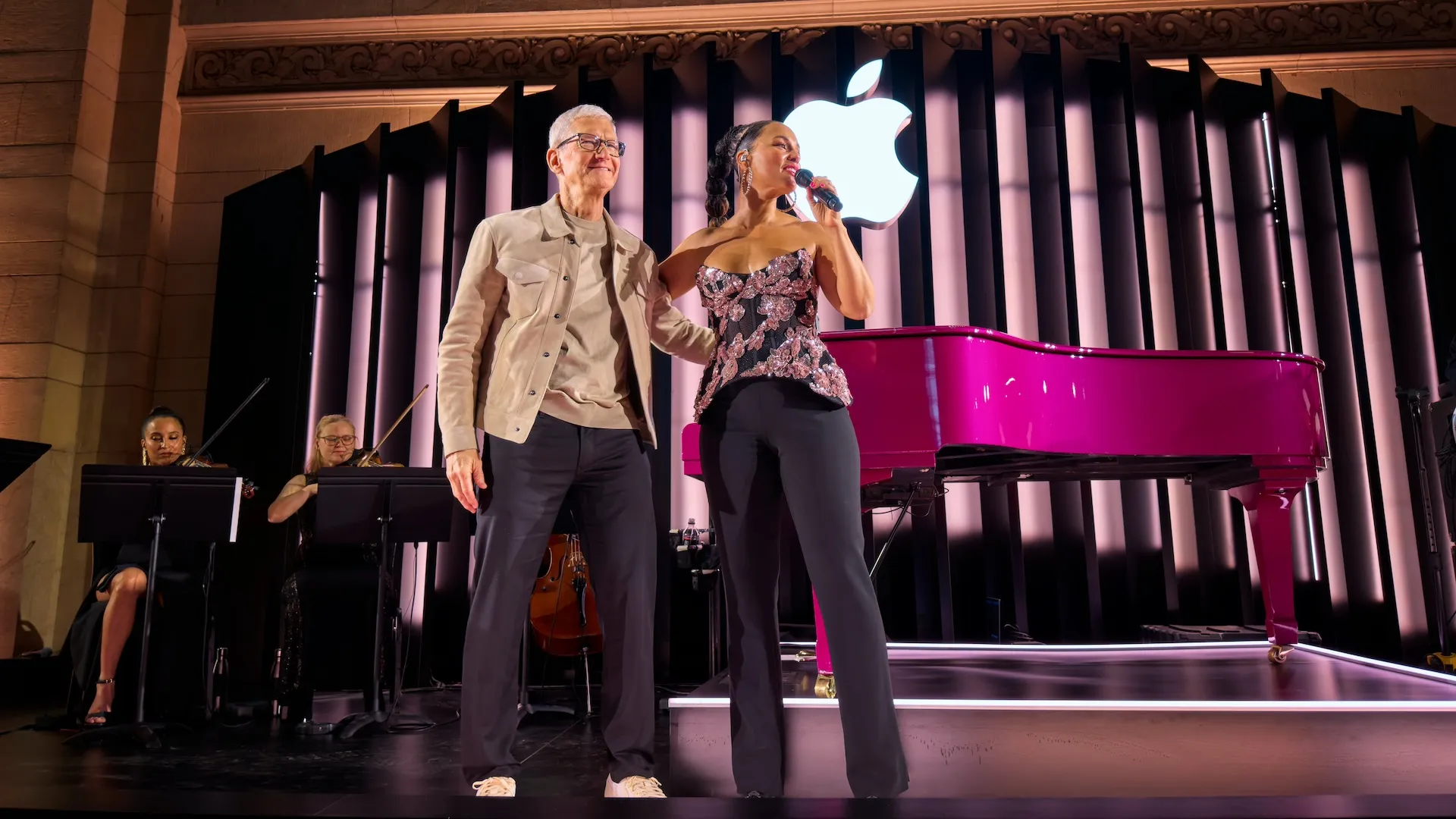
Tim Cook (Reflecting on Steve Jobs): “As we’ve celebrated that milestone this month, I’ve been reflecting on some powerful words from Steve: ‘When you grow up, you tend to get told that the world is the way it is… But life can be much broader once you discover one simple fact: Everything around you that you call life was made up by people that were no smarter than you. You can change it, you can influence it, you can build your own things that other people can use. Once you learn that, you’ll never be the same again.’ This is the ethos that brought Apple into the world in 1976. And for 50 years, it’s what has drawn the smartest, most passionate, most creative, and most committed people to this company.”
The Apple of today shares almost nothing material with the Apple of 1976, but it would like to believe that it still holds on to its original conviction: that technology should be designed for people who don’t care about it. Apple said it when nobody else was saying it, and then bet the company on it over and over—through a near-bankruptcy, a boardroom coup, the exile and return of its founder, and the loss of the man who made it feel all inevitable.
That bet, placed 50 years ago in a garage on April Fool’s Day, is now worth $3.7 trillion.